15 de diciembre de 2013

El hábito 3 de un Director de Proyectos eficaz: Autogestión


La persona de éxito
ha desarrollado el hábito de hacer las cosas
que quienes fracasan no gustan de hacer 
–Albert N.E. Gray


El tercer hábito de una persona eficaz: Primero lo primero

El tercer hábito de Covey se titula: "Ponga primero lo primero". El primer hábito dice "tú eres el programador", el segundo dice "escribe el programa", el tercer hábito dice "ejecuta el programa". El segundo hábito se ocupa de la primera creación, la creación mental, utilizando la imaginación y la conciencia moral. El tercer hábito se refiere a la creación física, utilizando el atributo humano de la voluntad independiente. Este es el hábito de hacer que las cosas se hagan (Getting Things Done, en inglés).


Las personas eficaces consiguen generalmente lo que se proponen, casi siempre con disciplina, empleando su máximo empeño y esfuerzo. Estas personas hacen lo que dicen (en inglés esto se dice: do the talk). No les tiene por qué gustar todo lo que hacen, pero es más fuerte su propósito que su disgusto. Cuando vemos que una persona destaca por su eficacia, esto no significa que termine todas las tareas, o que haga muchas más tareas que el resto (no confundir eficiencia con eficacia). Estas personas han desarrollado el hábito de conseguir hacer las cosas que ellas consideran verdaderamente importantes, y esto lo consiguen no puntualmente, sino de forma continuada. 


8 de diciembre de 2013

Me peleo por conseguir la gente que quiero


Cuando estudiaba el PMBOK, me llamó la atención la separación entre el proceso 6.4 Estimar los Recursos de las Actividades (un proceso de planificación, donde hay que decir, por ejemplo, que necesito 4 técnicos de sistemas y 2 programadores), del proceso 9.2 Adquirir el Equipo del Proyecto (un proceso de ejecución, donde ya ponemos nombres y apellidos a la gente que necesitamos).

Hasta entonces, yo pensaba que los dos procesos se hacían a la vez: Necesitaré un 50% de Pepe y a Luisa al 100%. Que existiera un proceso en el grupo de “ejecución”, es decir, cuando ya el proyecto está en marcha, ya me hacía pensar que el Director de Proyectos debía dedicar mucho más esfuerzo en la adquisición del personal. PMBOK también dice que los grupos de procesos se solapan, nada impide que la ejecución se solape con la planificación (esta actividad la tendrá que hacer Pepe para que dure sólo 15 días), o incluso con el inicio (Luisa sería recurso clave en este proyecto).


1 de diciembre de 2013

Me atrevo a hacer promesas

Para muchos jefes, proactividad en gestión de proyectos significa predictibilidad. Las operaciones del día a día son predecibles y uniformes, pero un proyecto no es así. Esfuerzos, costes, plazos, hitos, entregas, problemas, etc., no se distribuyen uniformemente: hay más entregas al final que a la mitad, la fecha de los hitos puede variar mucho. Se podría decir que muchas veces, la principal razón por la que nos colocan al mando de un proyecto es porque quieren que alguien vaya informando todas estas variables. 

El paradigma de la era industrial les hace pensar que pueden aspirar a un control determinista del proyecto: si controlan estas variables, controlan el proyecto. Por esta razón, estos jefes le pedirán muchas veces su mejor estimación sobre un plazo y un presupuesto, se lo apuntarán, y luego le volverán a preguntar cuando se aproxime la fecha, o el coste incurrido supere un umbral. 

24 de noviembre de 2013

Yo planifico mi proyecto

El primer síntoma de que un Director de Proyectos no es proactivo es que no tiene una planificación actualizada y creíble. En otras palabras, no sabe qué va a pasar en su proyecto la semana que viene, el mes que viene... Esto es muy grave. No por la mala imagen que proyecta como persona ineficaz, que también, sino sobre todo por la desmoralización que suele producir esto en los miembros del equipo.

No hay excusa para que un Director de Proyectos no tenga una planificación preparada, escrita o pensada, primero para organizarse él mismo, pero también para quien la pueda necesitar. 

17 de noviembre de 2013

El primer hábito de una persona eficaz: Sea proactivo


El primer hábito de Covey se titula: “Sea proactivo”. Es el primer hábito para superar el estado de madurez “dependiente”. Nadie puede aspirar a ser eficaz si le afecta todo lo que ocurre fuera. Si tiene un mal día o un buen día dependiendo de si llueve o hace sol, esa persona no puede ser independiente. Las personas independientes llevan consigo “su propio clima”. Saben reconocer su zona de control y actuar desde ella. Las personas “no somos como los animales”. Los animales son reactivos: ante un estímulo siempre reaccionan igual, están programados por el instinto o el adiestramiento.

3 de noviembre de 2013

Projects need more Sociology and less Technology


We Project Managers are mostly judged by results. This is not quite a rewarding profession: If we meet the goals, no one will praise us. If we don’t meet the goals everybody will criticize us. But the most of the project work falls out of our area of control: we are appointed not to do, but to manage what others do. 

Projects don’t usually fail just because of technological issues. You can easily find the required technical expertise among team members quite often. A project may fail just because team members John and Mike don’t even talk to each other. The absence of soft skills in project management is often the root cause of failed quality control and scope validation, low productivity of the team, high level of rework, slippages, cost overruns, etc. Our profession demands more of Sociology and less of Technology.

27 de octubre de 2013

Tools for Volunteering a Project


On September the 30th it was the project kickoff for a volunteering project aimed to translate into Spanish the book: A Pocket Companion to PMI's PMBOK Guide, authors Paul Snijders, Thomas Wuttke, Anton Zandhuis, edited at Van Haren Publishing. On this project, sponsored by PMI Netherlands, there is a volunteer team with members from several PMI chapters (Madrid, Barcelona, Valencia and Buenos Aires). We are 8 volunteers working as a virtual team. I'm honored to manage this project.

The main challenge is to get a high quality translation before the due date in January, so it is neccessary to keep stuck to a realistic plan. Being this a volunteering project, it is equally important to optimize the effort needed from volunteers, since everybody have many important things to do, apart from this project.

After 3 work weeks and 2 follow up meetings, we already have the feeling of a high performing team, and I believe this could have not been possible without the proper tools. In this project we are using 4 tools: Google Drive for document management, GoToMeeting for virtual meetings, Asana for task management and collaboration and TALAIA OpenPPM for project management. Following there is a short description on how we are using them, with a short video (in Spanish).


20 de octubre de 2013

Herramientas para un Proyecto de Voluntariado


En septiembre de 2013 se lanzó un proyecto de voluntariado con el objetivo de traducir al español el libro: A Pocket Companion to PMI's PMBOK Guide, autores Paul Snijders, Thomas Wuttke, Anton Zandhuis, editado por Van Haren Publishing. En este proyecto, patrocinado por PMI Holanda, participamos los capítulos de Madrid, Barcelona, Valencia y Buenos Aires. En total somos 8 voluntarios trabajando en un equipo virtual. Yo tengo el privilegio de dirigir el proyecto.

El reto principal es lograr una traducción de alta calidad antes de la fecha de publicación en enero, por lo que es necesario ceñirse a una planificación realista. No menos importante al tratarse de un proyecto de voluntariado es optimizar el tiempo debemos dedicar a este proyecto, pues todos tenemos otras cosas importantes que hacer.

Después de 3 semanas de trabajo y 2 reuniones de seguimiento, ya tenemos la sensación de equipo a pleno rendimiento,  y creo que esto no lo habríamos conseguido sin las herramientas adecuadas. En este proyecto usamos 4 herramientas: Google Drive para gestión documental, GoToMeeting para reuniones virtuales, Asana para gestión de tareas y colaboración y TALAIA OpenPPM para gestión de proyectos. A continuación voy a describir brevemente cómo las usamos.

13 de octubre de 2013

Visualize Destiny and Path


Following there are some lines that flows naturally when we integrate in our character habit 2.1) I Visualize Destiny and Path: 

  • “Affected users will need this training before week 15. Training feedback will be taken into account in change management activities.”
  • “First development iteration will solve all architectural technical issues throughout a prototype. Second iteration will release all functionality for accounts receivable, which is the most critical. Third iteration will cover the remaining functionality.”
  • “Testing separate team will be needed as of 5 FTE in July, 8 FTE in September and 10 FTE in January.”
  • “We should negotiate the licensing terms of the project product. Our company could extend this business line with this.”


6 de octubre de 2013

Project Managers enjoy farewells


We Project Managers are distinguished from Service Managers —a.k.a. Operation Managers— for mainly one reason: The thing which is managed, that is, the project, is coming to an end, eventually. From the very beginning, projects are born with this in mind: they are to conclude no later than a due date. Besides the timing goal, there are another goals not least important, of course, such as concluding on cost, delivering certain features, making the product to be perceived as “good” from the customer perspective, etc. Nonetheless, the most distinctive goal is that a projects start and finish.

One habit Project Managers are supposed to master is “start with the end in mind.” From day one the Project Manager has to visualize the destiny and the path. We strive to imagine how that final situationwill look like —being stakeholders' expectations met or exceeded. We want to do our best to get into that point. Any Effective Project Manager should admit that the project he is starting right now is “a formidable mess” making many people disturbed and upset because they will have to change. Each project suffer many problems, conflicts, unexpected crisis, etc. Each project success depends on team performance, but team members usually have not even met before. Worthy projects are subject to a lot of risk, and many of them depends very much on third parties' performance —and contract issues are often taken to litigation.

Since all of this “mess” has to be managed by the Project Manager, is perfectly normal he starts imagining that last day in which the final closure happens and everything is over finally: He has called a meeting with the sponsor and a representative group of stakeholders. He has elaborated a PowerPoint presentation and leant it by heart. He has dressed his best suit. He has prepared the room, the projector, printed handouts, etc. The stakeholders are sitting. It's time. Finally he is starting this well known ceremony called “Presentation of Project Results”. But this presentation is titled other way, in his mind: “Goodbye, I'm leaving.”


I think this way of thinking have to have some psychological roots. Doesn't it sound a little bit alienating that we want to kill what we have created with great effort and illusion: “our project”? However, this is precisely what we are expected to do: we start, we execute and we close projects. Once you have lived throught this for many times, you get used to closing, which is the toughest part, for sure.

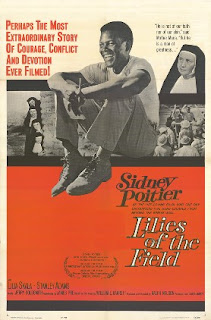
Recently I've watched the film: Lilies of the Filed, starring Sidney Poitier. The script resembles very much to a project —“Build a Chapel”— but the most inspiring part comes at the end: to my understanding, any project should be closed just like that.

What follows is a brief analysis of some key points of what I think is a good closing to a project. Important warning/disclaimer: I'm going to spoil the final scene of this masterpiece film, so if you have not seen it yet, please don't keep reading ;-)